




Peru
Travel on Your Own

A Little More Info
SINGLE SUPPLEMENT
Single travelers staying in a room by themselves will be charged this additional single supplement fee, as all of our regular prices are otherwise based on double occupancy.
SINGLE SHARE OPTIONS (if available)
If you are traveling alone and wish to share a room, we will make every effort to find you a roommate of the same gender, in which case you will not have to pay the single supplement fee. The single supplement will be charged until we are able to confirm a roommate for you. If we are able to match you with a roommate, the single supplement will be refunded. In the event that we cannot find a share for you, you will be required to pay the single supplement fee.
New: Click the Singles Find a Share' icon below or check our "Community" page to connect with other single travelers looking to share.
 Questions? Chat with a Regional Specialist
 News and Specials
 Email Trip to a Friend
 Singles: Find a Share


Peru
Travel on Your Own
Choose from any destination in the country and we can arrange a trip that you can enjoy on your own, including accommodations, transportation, activities and guides. Gain access to our full-service local offices and benefit from our expert local naturalist and biologist wildlife guides, trackers, vehicles, logistical support, and intimate destination knowledge. Please give us a call and we would be happy to craft a custom itinerary to meet your desires!
Tambopata Biosphere Reserve
The world's largest macaw and parrot clay lick is a full day's journey deep into the rainforest, where the headwaters of the Amazon river have created a paradise of biodiversity. Tambopata is home to 90 species of mammals (including 8 species of primates!) and 600 species of birds. Our lodges are owned in partnership with the local Infierno tribe and have been widely recognized as an outstanding model of ethical eco-tourism partnership. These lodges include the world famous Posada Amazonas, Tambopata Research Center, and Refugio Amazonas.
Manu Biosphere Reserve
Manu has the highest biodiversity of of any park on earth. It is home to over 200 species of mammals, (including 13 species of primates!) and 1,000 species of birds. Most visitors are restricted to the Cultural Zone where wildlife is less abundant, but Wild Planet Adventures offers a choice of the best known lodge in the Cultural Zone and one of the only lodges in the Reserved Zone. In the Cultural Zone, Conde Naste Traveler labeled Manu Wildlife Center "hands down the most intense wildlife experience I've had in the Amazon..." In the Reserved Zone, Manu Tented Camp is a truly unique way to sleep in a real bed with all the comforts you'd expect on a Wild Planet eco-tour. This lodge has been specially selected due to its outstanding wildlife viewing opportunities.
Cusco
The archaeological capital of South America, Cusco is rich in pre-Columbian remains such as the Qorikancha Temple, the Inca Baths with their sophisticated canal system, and the vast Sacsayhuaman Fortress site of ancient religious celebrations. Colonial treasures include mansions and churches (the Cathedral, La Merced Convent, La Compania), built on Inca foundations. Churches are full of marvelous works from the Cusco School of painting, distinguished by its mix of Catholic and pagan imagery.
Sacred Valley
Outside Cusco and in the Urubamba River Valley or "Sacred Valley of the Incas" is a favorite for outdoors activities: river rafting, hiking, horse-back riding, biking, ballooning, and take-off point for Inca Trail trekkers. Ollantaytambo fortress should not be missed. Pisac is a recommended visit for its Inca ruins above the own and the Indian market in the village square.
Machu Picchu
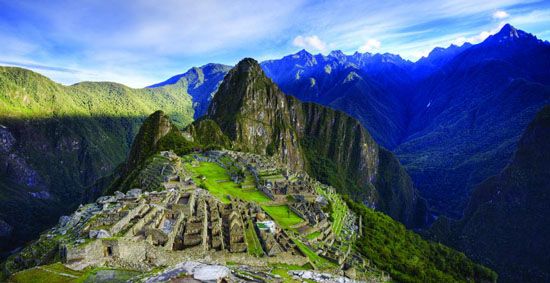
The Lost City of the Incas was a remote fortress/sanctuary abandoned by the Inca, reclaimed by the jungle and hidden from view until Hiram Bingham of Yale University rediscovered it in 1911. With altars, temples, staircases and terraces, this is one of the world's most extraordinary sites, one that can be visited by train on a day trip from Cusco, but better yet with an overnight stay.
Inka Trail
True Andean highlanders, the Incas chose the high route to Machu Picchu, with its gorges and passes and climactic mountain views. Their trail to Machu Picchu traverses a startling variety of micro-climates, beginning with an arid cactus zone on the Urubamba valley floor, rising through native Polylepis forest to bleak high-altitude grassland, and ending in mossy cloud forest draped with orchids and bromeliads. They celebrated the glory of the snow peaks by setting their trail along a ridge that descended from the sacred summit of Salcantay and ended at Machu Picchu. Wherever some astounding view or prominent natural feature captured their imaginations, they built magical stone outposts - intricate ceremonial settlements of carved stone hewn from the white granite of the region. These cling to mountain spurs, perch on narrow ledges or spill down plunging slopes, with water channels threading among the houses, as though planted there, without human intervention, by an extravagant nature. All this was abandoned around the time of the Spanish conquest, lying buried beneath the forest until 1915. Today we can hike this trail, seeing much of it intact and easy to imagine as it was in Inca times.
Lake Titicaca / Puno
The highest navigable lake in the world is the legendary birthplace of the Inka and the site of a fascinating culture unlike anywhere else. Its most remarkable feature is the floating islands of Uros, ancient inhabitants of the lake, known as the Water Tribe. These Andean natives built their own islands by periodically adding new layers of a unique plant called "totora", a type of reed. They also built their homes and even their boats out of this amazing reed. On Amantani Island, Quechua-speaking natives, still ruled by ancient traditions, welcome visitors into their homes to share their fascinating culture, art and tradition of ceramics and textiles. Nearby Taquile Island is inhabited by local communities steeped in ancient lifestyles and traditions who have developed strikingly efficient and original social systems. Their fine hand-weaving techniques are evident in the traditional bowler hats worn by women and the brightly colored headgearmen knit by the men. Its no coincidence that the nearby city of Puno is Peru's folklore center, with a rich array of handicrafts, costumes, fiestas, legends, and most importantly, more than 300 different ethnic dances. The most famous of these dances is the Diablada (Devil Dance), known for its grotesque masks and outrageous costumes, performed in February during the feast of Virgen de la Candelaria.
Peru Lodging
Our Ultimate Wildlife itinerary specializes in small, one-of-a-kind rainforest and jungle lodges, many of which have been featured on the Discovery Channel, Animal Planet, and in top travel magazines such as Travel & Leisure and Conde Naste Traveler. Great care has gone into our selection of lodging partners, with particular emphasis on lodges that offer outstanding wildlife viewing opportunities. Our partners in Tambopata are recipients of Conservation International Ecotourism Excellence Award and Conde Nast Traveler Magazine's Best Ecotourism Award. Our Manu partners are recommended by Lonely Planet, Insight Guides of Discovery Channel, Moon Handbooks, and Conde Naste Traveler raves: "hands down the most intense wildlife experience I've had in the Amazon....."
Note: The lodges below are representative samples, but specific lodges are not guaranteed. Wild Planet Adventures reserves the right to substitute lodges based on conditions, logistics and availability.
LIMA


Costa del Sol Ramada
By far the most convenient hotel to begin your Peru Ultimate Wildlife Amazon & Machu Picchu Adventure. Located just steps from the Lima International Airport, the hotel features a 24-hour restaurant with local and international cuisine, a 24-hour spa for relaxing massages, as well as a Jacuzzi, steam room and sauna. Connect to your friends and family using the free Wi-Fi Internet access. Cool off and go for a swim in the indoor pool. We have been using the Costa del Sol Ramada since it opened with consistent great reviews from our travelers.
SACRED VALLEY


Casa Andina Private Collection Sacred Valley (Alternate Lodge)
Casa Andina Private Collection Sacred Valley is a refuge in the mountains, with fabulous views of the Andes from all rooms. This is a cozy hotel and has a local inspired design with rustic details. Casa Andina Private Collection Sacred Valley has 85 rooms and 7 Andean Cottages, which allows visitors to enjoy the peace and energy of the Sacred Valley while enjoying the view of the Andes. Casa Andina's services include complimentary WiFi Internet (in public areas), Internet center, meeting room, fitness center, sauna, and spa.


Sonesta Posadas del Inca Yucay
This ancient former monastery is located in the middle of the Sacred Valley, at 8,600 feet. It was built in the colonial style of the eighteen century, and is surrounded by beautiful gardens and the spectacular foothills of the Andes. Enjoy the relaxing ambiance with warm weather, sunshine and fresh air year round. Local artisans often display their art and crafts in the central square, just as they did when it was a monastery. Posada Yucay is an ideal stopover whether you're exploring the famous Pisac and Chincheros markets, Salt mines of Maras, the town of Moray, Ollantaytambo ruins or the UNESCO World Heritage site of Machu Picchu.


Hotel Sol y Luna (Alternate Lodge)
Winner of the 2013 Trip Advisor Traverler's Choice "Top 25 Lodges in the World" and "Number 1 Lodge in South America", Sol Y Luna is a truly special lodge. Their founding philosophy is to respect the natural environment and live in harmony with the local culture. Sol y Luna has achieved such prestige by blending hard work with a passion for high quality, giving travelers a unique, genuine, and transcendant experience.
Sol y Luna offers a variety of large bungalows where luxury is exquisite rather than ostentatious and in each detail breathes the Sacred Valley, its villages, people and nature. The clay murals of the artist Federico Bauer - inspired by the surroundings - recreate an atmosphere of magic and contemplation. The wide entrance hall, living room and independent bedroom, all decorated with folk art, and the terrace with its jacuzzi, complete the poetry of the premium bungalows. These luxurious spaces come with personalized service, a private reception, marvelous gardens and preferential access to Sol & Luna's services, such as its exclusive Yacu Wasi spa, Killa Wasi restaurant, as well as the offers made by Wayra like the wine cellar, the chef's table, our own Peruvian-Paso-horse ranch and numerous outdoor activities.
MANU - CULTURAL ZONE


Manu Wildlife Center
Featured in Conde Naste Traveler and National Geographic, Manu Wildlife Center consists of 22 double bungalows arranged around a pleasant and well planned Amazonian garden that attract birds, butterflies and mammals. The lodge is surrounded by 48 km of trails, where you can see some of the 13 species of primates that inhabit Manu Biosphere Reserve, the #1 most bio-diverse park on earth. The lodge features 2 rainforest canopy platforms with spectacular vistas of the rainforest, ideal to observe Manu's astounding 1,000 species of birds and 200 species of mammals. A 3 km trail takes you to the world's largest (and perhaps only) Tapir clay lick in the Amazon, where there is a raised platform camouflage blind with mosquito nets for night-time observation of the largest mammals in the rainforest. A short boat ride on the Madre de Dios (Mother of God) river brings you to another clay lick frequented by various species of parrots and macaws.
All bungalows are private and separated from each other for privacy and all have large windows facing the forest and garden. They have private toilet and shower facilities, hot water and individual mosquito nets. The large dining and bar/lounge areas are separate from the other facilities but close to all bungalows and the nearby kitchen area. The menu is high quality and very wholesome, although not gourmet, featuring fresh vegetables, fruits, grains and meats. There is a separate spacious bar and lounge area which is located a short distance from the dining area. A variety of cold non-alcoholic and alcoholic beverages are always available.


Manu Wildlife Tented Camp
Deep in the Reserved Zone, our tented camp offers simply the finest wildlife viewing opportunities in the most remote section of the most bio-diverse park in the world. This is truly an unparalleled opportunity to see the wildlife of the Amazon with all the comforts of home.
Manu Tented Camp is actually more like a lodge than a tent camp. It features screened, hermetically-sealed, double-occupancy, walk-in tents with hinged doors and solid wooden floors. Each tent measures 16.5' x 10' x 7' and the floor is elevated above the ground on wooden stilts. There are extra-long twin beds in each tent, each with a mosquito net. Our camp also features an elevated, screened dining room with wooden floor and a separate complex of shared hot-water showers and flush toilets.
CUSCO


Hotel Monasterio by Orient-Express (Upgrade Option)
Located in the vibrant heart of Cusco, this five-star Orient Express hotel perfectly combines historic grandeur with modern elegance. Originally built in 1595, Hotel Monasterio sits on the site of Inca Amaru Qhala's palace. Three year's later, the Spanish took it over and founded the Seminary of San Antonio Abad. An earthquake seriously damaged the building in 1650, and upon restoration the beautiful Chapel was added. In 1965, the building was remodeled as a hotel. Hotel Monasterio is now a national historic landmark, protected by Peru's National Institute of Culture.


Casa Andina Private Collection Cusco (Alternate Lodge)
Casa Andina Private Collection Cusco is located in a beautiful eighteenth century building, recently refurbished, with 5 stately colonial courtyards, only 4 blocks away from Cusco's Main Square. Its design aims to capture the local flavors while offering the facilities and services of a first class hotel with complimentary Wi-Fi internet, internet center, ATM and massage spa. Its 93 rooms are distributed over 2 floors. Casa Andina Private Collection Cusco's strategic location is ideal for our Cusco segment, and we often use it as an alternative to the Novotel.


Hotel Novotel Cusco
This 4-star hotel has 99 rooms, all inside a 16th century former monastery. There are two types of rooms: the original Colonial rooms which have been renovated into superior accommodations, and a newer, modern wing of international standard rooms. The spectacular courtyard features the original 16th century Spanish architecture, with dozens of intricate arches topped with a glass pyramid, and is one of the hotel's best features. The Novotel is an ideal location close to the central Plaza de Armas and cathedral, (but not so close as to be noisy) and only 10 minutes from the airport.
MACHU PICCHU


Inkaterra Machu Picchu Pueblo Hotel
The Inkaterra Machu Picchu Pueblo Hotel is a collection of comfortable small and charming cottages located at the lower part of the Machu Picchu mountain, very close to the ancient ruins. It is surrounded by more than 12 acres of private ecological tropical gardens and trails with many orchids and a large variety of colorful birds. We've been using this lodge for many years, to rave reviews from our travelers. We think its the best lodge and best location in Machu Picchu.
TAMBOPATA - RESERVED ZONE


Tambopata Research Center
Featured in National Geographic magazine, the Tambopata Research Center (TRC) one of the most remote rainforest lodges in South America, 46 miles upstream from Posada Amazonas, deep within the 700,000 hectare uninhabited nucleus of the reserve of Tambopata Reserve. This area is visited by less than 3,500 travelers/year (compared to the Cultural Zone where most commercial tourism takes place, which has over 35,000 visitors/year.)
In this isolated and uninhabited part of the Tambopata Reserve, wildlife is dramatically more abundant, the rainforest is pristine, and populations of wild animals are all at carrying capacity. The world's largest macaw & parrot clay lick is less than 500 meters from the lodge, and is the star attraction. Sightings of monkeys, tapir, and other large mammal species are also much more frequent in this area. Jaguars are sometimes seen near the river bank, your odds of seeing jaguar increase with Wild Planet's exclusive "Jaguar Kayak Float" ; we'll float silently downriver at dawn, at the right time and place where most sightings have occurred.
The forests around Tambopata Research Center offer excellent probabilities of seeing primates such as Brown Capuchin, Squirrel, Dusky Titi, Red Howler Monkeys, Saddleback Tamarins and Spider Monkeys. Other mammals such as Tayra and Agouti are seen almost daily around the TRC clearing. Tapir are seen recurrently from the beach in front of the clay lick where they often cross the river. The TRC clearing is almost as good as the surrounding trails for encounters with foraging agouti, tayra, nocturnal pacarana, and ocelot.
The world's largest macaw & parrot clay lick is less than 500 meters from the lodge, and is the star attraction. The clay lick is a huge, 50 meter tall cliff of reddish clay with high concentrations of minerals that extends for 500 meters along the west bank of the Tambopata River. On most clear mornings of the year, depending on the season, hundreds of parrots and macaws flock to the lick as well as guans, tapir, capybara, and monkeys.
There are also outstanding photographic opportunities in the nearby palm swamp, where blue-and-gold and red-bellied macaws nest during the breeding season (November to March). A 65 foot tower with an open platform allows for eye-to-eye observation and outstanding photographs of nesting macaws from just 20 yards away.
TAMBOPATA - CULTURAL ZONE


Refugio Amazonas
Refugio Amazonas is a 32-bedroom lodge four hours from the Puerto Maldonado airport. It is ideal for soft adventurers and families, and has a rainforest trail designed especially for children, the only one in the Peruvian Amazon. Refugio is located in a 200-hectare private reserve within the buffer zone of the Tambopata National Reserve. Refugio Amazonas partners with local families to ensure that they share in the benefits of eco-tourism.


Posada Amazonas
Posada Amazonas stands in a 2,000 hectare reserve set aside by the indigenous Amazonian Ese'eja community to protect primary forest and wildlife. The lodge is a joint venture with the Ese'eja community, who take home 60 percent of the profits, have an equal say in all decisions, and enjoy training and jobs at the lodge. The lodge is a model of sustainable operating practices; it was built using only local materials with modern, low-impact, eco-lodge technology. There are ample opportunities for cultural interaction with the Ese'eja during daily wildlife-viewing excursions to oxbow lake to see giant river otters, clay licks to see macaws, and rainforest trails to see 8 species of primates.
Peru Activities
At a Glance

- Wildlife viewing, birding, hiking and kayaking in 2 Amazon Reserves.
- View macaws and parrots by the hundreds at clay licks.
- Explore oxbow lakes for giant otters, hoatzin, and 13 species of primates.
- Machu Picchu full tour, including Cusco and the Sacred Valley.
- Sight-seeing train through 18,000 ft. snow-capped peaks of the Andes.
- Visit with an Infierno shaman and tour a medicinal garden.
Exclusive Wildlife Activities

We've included a wide variety of adventure and cultural activities in 4 distinct regions of Peru designed to educate, inspire, and bring out the wonder in you. This is a well-rounded tour with a strong wildlife emphasis, while also featuring Peru's most famous cultural sites. All of our activities are flexibly designed to accommodate different skill levels and interests, while exposing you to a variety of unique eco-systems in order to see the most amount of wildlife. And did we mention fun?
Jaguar Kayak Float
Highly recommended by our clients! Requires adding 1 extra day in the Tambopata Reserved Zone. Kayak downriver silently at the first sign of dawn, looking for jaguars and tapirs by the riverbanks. We have seen an exceptionally high number of jaguars and tapirs as they visit the river to drink in the stillness of the morning. Enjoy a few hours on the river until the motorized canoe catches up to us for the ride back.
Pygmy Marmoset Excursion
Our expert naturalist guides at Cocha Salvador in the Manu Biosphere Reserve will track the world's smallest (and cutest) primate in our exclusive excursion.
Other Activities

Tambopata Reserve
Boat up the headwaters of the Amazon River. View 5 species of Macaws and nearly 20 species of parrots and parakeets as the flock to clay licks in search of the minerals that help their digestion. Wildlife viewing at an oxbow lake, a canopy tower, and hiking rainforest trails. Visit an Infierno shaman and tour a medicinal garden.
Cusco
Tour the oldest continuously inhabited city in the world, including the Santo Domingo Convent Monastery - the legendary Qurikancha "Site of Gold", the most important temple devoted to worship of the sun and whose walls were plated with sheets of gold; the Plaza de Armas and the Cathedral.
Sacred Valley
Explore the countryside outside Cusco and visit some of the remarkable Inca ruins in the area including the cultural center of Sacsayhuaman, the temple and amphitheater of Kenko, Tambomachay and Puca Pucara. Enjoy breathtaking views as we come down the mountain into the Sacred Valley. Travel aboard a spectacular sight-seeing train to Machu Picchu, "The Lost City of the Incas". The train has ceilings made mostly of glass which allow you to gaze out at the 18,000 foot snow-capped peaks of the Andes and marvel at the Inka ruins around nearly every bend.
Machu Picchu
Fully-guided tour of this marvelous citadel, visiting the main square, the royal quarters, the temple of the three windows, the circular towers and the sacred sun dial and burial grounds. Machu Picchu is a World Heritage Site and one of the best preserved archeological ruins of spiritual significance.
Manu Biosphere Reserve
Hiking, boating, and extraordinary wildlife viewing! Manu has the highest biodiversity of any park on earth. Most visitors are restricted to the Cultural Zone where wildlife is much less abundant, but we will venture deep into the most remote and wildlife-rich part of Manu called the "Reserved Zone," including Cocha Salvador. No other Peru itinerary will expose you to so much wildlife! 200 species of mammals live here; tapirs and jaguars are commonly sighted. Manu's 13 species of primates include wooly monkeys and emperor tamarins with white mustaches. The lowland rainforest in Manu harbors 1,000 species of birds, the highest concentration of bird life on earth; 40% more than the Brazilian Amazon!
Peru Wildlife
Prolific Sightings

Peru offers unparalleled access to the deepest parts of the Amazon, with astounding wildlife viewing opportunities. Our "Ultimate Wildlife" adventures are specially designed to increase the odds of encountering wildlife, especially rare and endangered species. No other Peruvian itinerary will expose you to so much wildlife! Local naturalist guides, wildlife and natural habitat education, special night hikes for nocturnal animals and other unique features make this truly the ultimate in wildlife adventure travel.
Primates: brown capuchin monkey, squirrel monkey, dusty headed titi monkey, red howler monkey
Birds: blue and gold macaw, scarlet macaw, red and green macaw, chestnut-fronted macaw, red-bellied macaw, toucan, and dozens more
Other: capybara, giant river otter, tyra, brown agouti, sloth
Likely Sightings

Primates: spider monkey, night monkey, saddleback tamarin, wooly monkey
Other: neotropical otter, white-lipped peccary, collared peccary, olingo, kinkajou
Weird & Wonderful: pygmy marmoset, emperor tamarin, monk saki, tapir
Rare or Endangered Possible Sightings

Primates: Goeldi's monkey
Cats/Predators: jaguar, jaguarundi, puma, ocelot, bush dog
Birds: harpy eagle
Other: silky anteater, giant anteater
Peru Guides
Fiorella Caleni

After studying tourism at the Americana Institute in Cusco, Fiorella Caleni started guiding at Tambopata National Reserve in Puerto Maldonado. After working for 3 years at Tambopata National Reserve, she began guiding in Manu National Park. In order to get more experience as a naturalist guide, she traveled to several countries such as Panama, St. Andrew Island, Brazil, the Dominican Republic, and Caribbean Islands such as Barbados, St. Lucia, St. Kitts, and Martinique.
Peru FAQ
Peru Facts for Visitors


Official Name
Republic of Peru
Population
29 million
Capital City
Lima, population 7.6 million
People
45% Amerindian, 37% Mestizo (mixed Indian descent and European), 15% White and 3% Black, Japanese, Chinese, and other
Languages
Spanish, Quechua and Aymara. Spanish is the official language of Peru; Quechua and Aymara are spoken in many highlands regions by indigenous groups. During your travels in Peru you will find that most people working in the travel industry (airlines, hotels, et cetera) speak English as a second language. You should have little trouble getting around most of the common tourist locations; however, knowing a little Spanish goes a long way. If you don't know any Spanish, it's a good idea to bring along a phrasebook.
Religion
81% Roman Catholic, 12% Evangelical, 6% other
Time
5 hours behind Greenwich Mean Time (-5 GMT). Daylight Saving Time is not observed.
Electricity
220V, 60Hz is standard voltage in Peru, but many four and five-star hotels also have 110V power available. Our system of rainforest lodges also use 220V; keep this in mind when bringing recharging equipment.
Major Industries
Pulp, paper, coca leaves, steel, chemicals & minerals, tourism
Telephone Codes
51 - country code
01 - city code for Lima
84 - city code for Cusco
54 - city code for Arequipa
74 - city code for Chiclayo
Visas & Departure Tax
A valid passport and proof of onward passage are required. Citizens from USA, United Kingdom, Canada, and Australia do not require a visa. Your passport should be valid for at least six months after your date of arrival. All visitors are required to fill out a tourist card. These short applications are provided on your flight to Peru or at border crossings. Upon arrival in Peru, you will receive a copy of this card from Peruvian Immigration stating the length of approved stay, usually ninety days. While traveling in Peru, keep your copy with your passport and present it to authorities when departing the country. Please visit the Embassy of Peru website (www.embassyofperu.org) for the most current visa information.
The international departure tax ($31 as of 2012) may be paid with US dollars, its equivalent in soles or a combination of both.
Money / Currency
Peruvian currency is known as the NUEVO SOL, written as (S/). It comes in bills of 10, 20, 50, 100, and 200 nuevo soles, and coins of 5, 10, 20, and 50 centimos, 1 sol, and 5 soles. The latest exchange rates can be found at http://www.xe.com/. At the airport and in the larger cities and towns, you can exchange travelers' checks and US dollars to soles. When changing U.S. dollars, use new or undamaged bills, as torn or heavily crinkled bills are not accepted. Some of the larger banks will have ATMs that can withdraw funds using Visa cards - be sure you know your PIN number. Credit cards are becoming more widely accepted, however not in remote areas, and should not be relied on. If you plan to use a credit or debit card, remember to call your bank in advance of your trip and let them know you will be using the card internationally. If you don't do this, banks will sometimes flag your account for fraudulent activity when you use your card abroad and it can be difficult to have the fraud alert lifted quickly.
Climate / Best Time to Go
Amazon: The Amazon watershed begins at the peaks of the Andes, but the rainforest area termed the eastern lowlands begins at an elevation of about 1200 feet and slopes down gently northeastward to 300-400 feet. The eastern lowlands are covered with dense tropical rainforest. It is always hot and humid in the jungle regions, with two seasons. In the dry season from May to October, sunny days heat up to the high 80s, with occasional cold fronts bringing rain in the southern Peruvian Amazon. Daily rain showers characterize the rainy season from November to April; at this time it may be difficult to get around in the jungle.
The Andes: Known as the backbone of South America, the Andes consist of two parallel ranges, the eastern and western cordilleras, extending from the northwest to the southeast, and comprise the second highest mountain range in the world. 160 miles inland from the Pacific, the Andes jut up to heights of 20,000 feet. Most of Peru's Andes lie between 9,840 feet to 13,120 feet, with peaks separated by deep canyons. The weather in the high sierra separates into two defined seasons: in summer, from May to October, days are sunny; nights are cold and rain scarce. Rainfall is abundant from December to March. Temperatures in the highlands fluctuate between 35 degrees F and 68 degrees F.
Vaccinations
You should visit your doctor or travel medicine clinic 4-6 weeks prior to your departure date to get vaccines or medicines you may need for your trip. You can read more detailed, country-specific information on vaccinations and health in Peru on the Center for Disease Control's (CDC) website at www.cdc.gov. Specific questions on anything pertaining to tropical diseases and their prevention should be addressed to them. You must check the CDC web site in advance of your trip to be sure you are current.
Required
At the time of writing there are no vaccination requirements for entry into Peru.
Recommended
Routine vaccines: Measles-mumps-rubella, diphtheria-pertussis-tetanus, and varicella (chickenpox).
Hepatitis A, Hepatitis B, and Typhoid vaccines
Malaria: The Amazonian areas you will be visiting in Peru have a risk of malaria, however the risk is low. It is possible, although unlikely, to get malaria while visiting these areas of the country. Talk with your doctor or travel medicine clinic to decide if taking an anti-malarial medication is the right choice for you.
Yellow Fever: The Amazonian areas you will be visiting in Peru have a risk of yellow fever. Talk with your doctor or travel medicine clinic to decide if a yellow fever vaccine is right for you.
Best Eats/Must Tries
Cuy - aka guinea pig, a delicacy in the highlands
Lomo Saltado - a kind of stir-fried beef dish with onions, vinegar, ginger, chili, tomatoes and fried potatoes, served with rice (found on every menu)
Papas Rellenas - stuffed baked potatoes, delicious and found in the highland regions on just about every street corner
Ceviche - a must try along the coastal areas. Can be made with either shrimp or sea bass. One of the most authentic Peruvian dishes
Palta Rellena - avocado stuffed with chicken salad. An excellent appetizer
Choclo con queso - corn on the cob with cheese
Caucau - a stew made with tripe, potatoes, peppers and parsley (especially popular in the Colca Canyon region)
Rocoto Relleno - a spicy bell pepper stuffed with beef and vegetables
Cocada al Horno - for the sweet tooth, made with coconut, egg yolk, sesame seeds, wine and butter
Picarones - cassava flour fritters made with eggs, deep fried and served in honey
Tejas - a sugar candy wrapped in waxed paper, pecan flavor is the best
Drinks
Chicha Morada - our favorite Peruvian drink, Chicha Morada is made from the juice of purple corn, with a chai-like blend of spices and laced with bits of pineapple. It all comes together in a vibrantly refreshing and very tasty drink
Inca Cola - you've got to try it! Its a yellow soda pop that tastes like fizzy bubble gum or a little like vanilla
Pisco Sour - even though it comes from the village of Pisco, you can drink one just about anywhere in Peru. It's very similar to a Tom Collins and is made with white grape brandy
Mate de Coca - a tea made from coca leaves, good to drink if you feel the signs of altitude sickness setting in
Cuzquena and Arequipena - good local beers available in both larger bottles and as dark varieties
Guinda - a sweet cherry brandy
This Trip's Exclusive Wildlife Features:


- Float silently downstream looking for jaguars in our exclusive Jaguar Kayak Float
- Find the world's smallest (and cutest) primate at Cocha Salvador in our exclusive Pygmy Marmoset Excursion
- Reserved Zone Specialists - visit the remove Reserved Zones of Tambopata and Manu Biosphere, which have far less visitors and dramatically more wildlife
- Nocturnal camouflaged blind for tapirs
- Superior Wildlife Access - our lodge in Tambopata's Reserved Zone is located right by the side of the world's largest macaw and parrot clay lick, and is the only lodge in this zone
- Float silently downstream looking for jaguars in our exclusive Jaguar Kayak Float
- Find the world's smallest (and cutest) primate at Cocha Salvador in our exclusive Pygmy Marmoset Excursion
- Reserved Zone Specialists - visit the remove Reserved Zones of Tambopata and Manu Biosphere, which have far less visitors and dramatically more wildlife
- Nocturnal camouflaged blind for tapirs
- Superior Wildlife Access - our lodge in Tambopata's Reserved Zone is located right by the side of the world's largest macaw and parrot clay lick, and is the only lodge in this zone

Share this trip via Email


